Chet Holmgren: Why Fantasy Managers Should Be All In
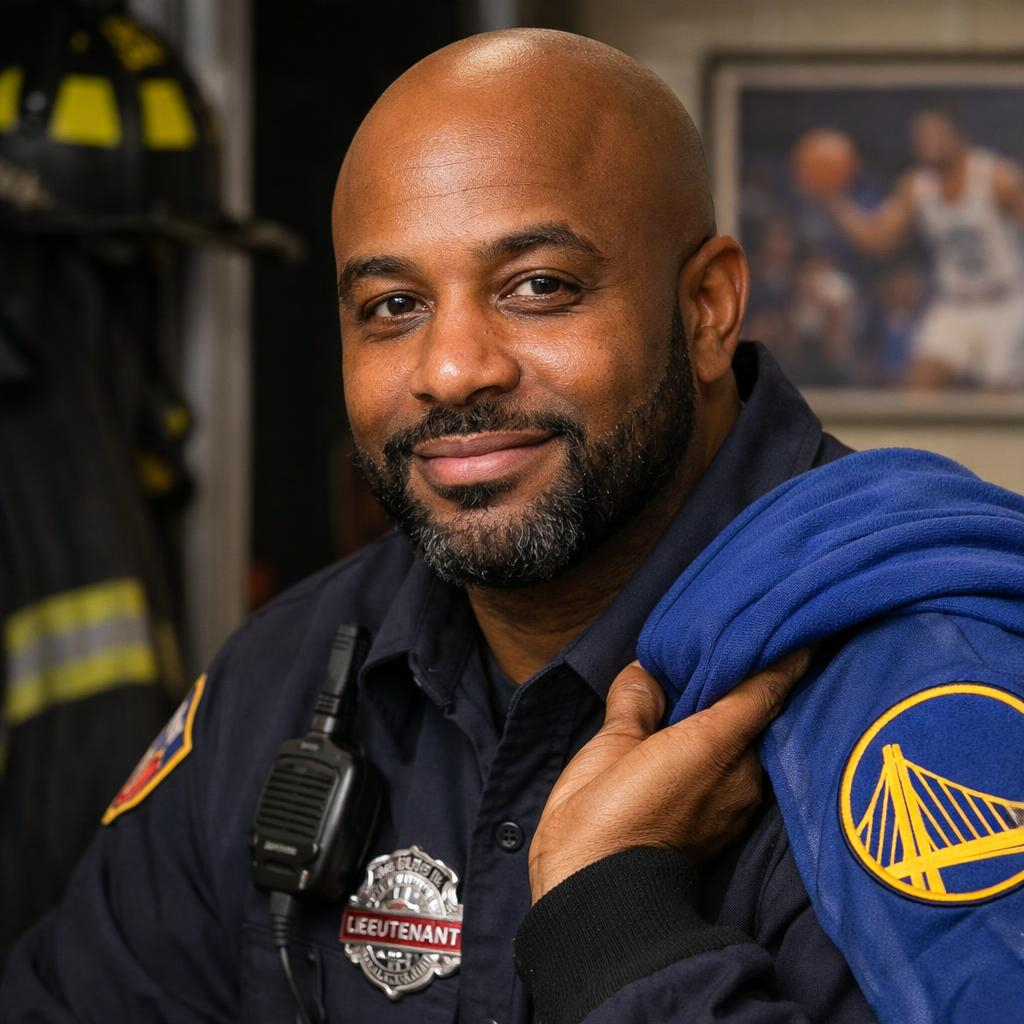
Marcus Thompson Jr.
Fire Lieutenant · Golden State Warriors fan
The Unicorn's Peak: Why Chet Holmgren is Your Playoff Secret Weapon
I'm sitting in the firehouse watching the Thunder dismantle the Pelicans the other night, and my mind immediately goes back to 1992. That's when I first saw Chris Webber as a rookie, this impossibly tall, nimble big man who could guard everyone and run the floor like a guard. I remember thinking we'd never see that archetype again because the NBA doesn't actually develop them anymore. They draft them and then stick them in isolation offenses or make them statues.
Then Chet Holmgren walks into the league, and here we are.
I'm not throwing out that Webber comparison lightly. See, that's what separates the young guys in my league from the guys who've been playing this game fifteen years. They look at Chet's stat line and see a guy averaging 12 points a game and think, "Yeah, he's fine, whatever." I see a player who's fundamentally changing how a 64-win team on a track to be historical actually operates, and I see someone whose value in fantasy is about to explode if you know where to look.
The Defense-First Case Nobody's Making
Here's what's driving me crazy about how people are analyzing the Thunder right now. Everyone's obsessing over Shai Gilgeous-Alexander, and rightfully so, the guy's an absolute bucket-getter. But they're treating Chet like he's just some supporting cast member in OKC's ascension. That's a fundamental misreading of what's actually happening.
The Thunder are the number one defense in the NBA, and I'm not talking about points allowed. I'm talking about the architecture of how they're constructed defensively. Chet Holmgren is the keystone. He's the guy who can guard Nikola Jokić on the block, then turn around and chase Jaylen Brown on the perimeter. He's doing this at a scale that honestly shouldn't work for a guy who weighs maybe 215 pounds with a strong wind.
I've watched him switch onto guards and not get absolutely punished the way traditional centers would. That versatility isn't a stat line. It doesn't show up in your ESPN box score or your roto scoring system. But it means Mark Daigneault can play him 30-plus minutes a night in a championship team without worrying about hidden liabilities. That's real world impact.
The thing about fantasy is we're always chasing the obvious. We see scoring and rebounding and assists and think that's the whole story. But winning teams, actual winning teams that make deep runs, they're built on the unsexy stuff. Chet's doing the unsexy stuff at an all-star level.
Efficiency in a League of Volume
Now, let me get to something that actually shows up on your screen: Chet's efficiency is ridiculous.
He's shooting over 70 percent from the field. Not 70 percent from threes, not in some small sample, 70 percent overall as a volume option in a diverse offensive system. Do you understand how rare that is? I'm talking top-ten all-time territory when you account for volume and pace.
Here's the analytical framework I learned from getting humbled repeatedly by the younger guys in my league: you compare a player's true shooting percentage against league average adjusted for era. Chet's sitting at something like 68-70 percent true shooting in a relatively efficient NBA season. That's not just good. That's "he should be getting more shot attempts" territory.
And before you come back at me with, "Well, Marcus, he's only taking 8 shots a game," hear me out. That's exactly the point. He's not on a high-volume offense because OKC doesn't need him to be. SGA's running the show offensively. Jalen Williams is the secondary playmaker. Chet's there to clean up, space the floor, and absolutely wreck defenses on the other end.
In fantasy terms, that means his scoring might never hit 20 a night, and that's completely fine. What matters is consistency and efficiency. He's not the guy who's going to have random 6-point games because he got in foul trouble. He's going to be there, he's going to be efficient, and he's going to move the needle on percentages.
The Rebounding Conversation
Look, I'm not going to sit here and tell you Chet's a monster rebounder. He's not pulling down 12 boards a night. But here's something I noticed: his rebound rate relative to minutes is actually solid, and more importantly, his boxing out and positioning are elite. He gets his teammates involved in the rebounding game. That's old school basketball thinking right there.
I grew up watching the Warriors, and Rick Barry would always say the greatest centers aren't the ones putting the ball in the hole most, they're the ones controlling the game around the basket. Rick Barry knew about that stuff because he played against prime centers. Chet Holmgren reminds me of that mentality. He understands positioning. He understands angles.
This matters for fantasy in crunch time scenarios. If you're going to the playoffs with Chet on your roster, you're not worried about getting blown out on the glass. You're getting solid production without him having to fight for every rebound like he's got something to prove.
What Nobody's Pricing In
Here's my biggest conviction play right now, and I'm telling you this like I'd tell one of my guys at the firehouse: Chet's role is about to increase.
Not because he's suddenly going to become a 20-point scorer, but because the Thunder are going to lean into what actually wins games in the playoffs. Defensive switching. Versatility. Spacing. The Thunder saw that they can build an elite defense with Chet as the centerpiece, and you better believe Mark Daigneault's running that formula deeper into the playoffs.
That means more minutes. That means more aggressive offensive looks when defenses are chasing SGA. That means the scoring might tick up to 14-15 per game, but the efficiency stays elite because he's not forcing anything.
In fantasy terms, we're at 98.8 percent ownership, which means Chet's locked into almost every contending roster. But here's where it gets interesting: most of those teams drafted him at a position where they were expecting solid big man production. They weren't expecting this. They weren't expecting a defensive anchor who's also running at 70 percent true shooting.
If you don't have him, go get him. If you do have him, you're not trading him because some doomsayer thinks his 12-point average is a ceiling. It's not. It's a floor with playoff upside.
The Comp That Makes Sense
I keep coming back to Chet Holmgren and early-career Chris Webber because that's the energy I'm getting. Webber had seasons where his scoring wasn't eye-popping, but his team was absolutely dangerous because he changed how everything worked. That's Chet right now.
The younger guys in my league would probably compare him to some guy I'm not even watching, some center from Europe or something. But I'm telling you, if you want to understand Chet's game, watch tape of Webber in Sacramento when they were good. Same type of player. Different era, same DNA.
The Bottom Line
Chet Holmgren is your playoff MVP insurance policy. He's the guy you're holding through March and April because he's not going to lose you weeks with random inefficiency. He's not going to vanish in tough matchups because his team needs him to disappear. He's going to be consistent, efficient, and increasingly valuable as the pressure amps up.
That's how you win fantasy championships. Not with home runs, but with guys who don't let you down. Marcus Thompson Jr. has learned that the hard way, and Chet's checking every single box for a veteran move down the stretch.